

Industrial Oil Mist Collectors for CNC Machining & Metalworking Operations
Machining with oil or water-based coolants releases a fine aerosol mist that settles on CNC controls, PLC boards, floors, optics, and your operators’ lungs. An industrial oil mist collector captures that mist at the source before it becomes a maintenance or safety hazard.
Spartan Air designs, engineers, and installs mist collection systems, from single-machine units to central systems serving full machining lines, for facilities across PA, DE, MD, DC, and Southern NJ.

The Need for Mist Collection is Real
Technology is progressing. Metal cutting is getting faster. The need for larger amounts of water-based or oil-based coolants is increasing. And when those coolants are released as mist into your facility’s atmosphere, existing problems can be exacerbated, and new issues can arise.
Reducing the amount of oil mist in your atmosphere will cut maintenance costs, make housekeeping simpler and more affordable, and keep your operators safe when using your machining equipment.

The Real Cost of Oil Mist
Failure to capture and filter coolant mist and smoke can lead to the build-up of oil residue, leaked liquids on machinery and floors — and, in general, equipment, health, and safety hazards.
You know all that. But do you know how important it is to choose a mist collector supplier who is well-versed in filter types, airflow requirements, and all types of applications relating to mist collection?
At Spartan Air, we are ready to talk about different types of mist collection systems. You don’t have to understand what’s involved with different types of mist collection. You do, however, need to grasp the importance of hiring an air filtration company that does — because the difference between a properly sized oil mist collector and an undersized unit is the difference between a clean facility and an ongoing maintenance nightmare.
The industrial mist collection systems we design, engineer, and install address all levels of concentration and capture. No matter the size of your facility, we will deliver a single-machine oil mist collector or central mist filtration for your entire operation.
Let’s Get Started with Your Oil Mist Collector
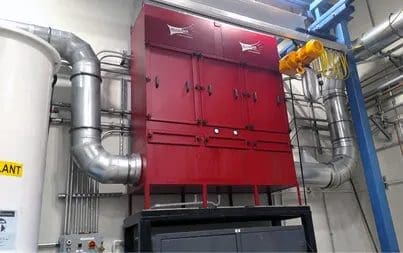
Oil mist collection systems can be machine-mounted for use with just one piece of equipment, or they can be ducted to cover multiple CNC machining centers. Whether you need a single-machine oil mist collector or a central mist collection system serving your entire production line, there is a solution that fits your operation.
Industrial mist collectors are used for eliminating oil mist, coolant aerosol, and other types of metalworking emissions. Mist collection technology covers many needs for all types of industries and applications. Get in touch with us today to talk about your unique requirements and how we can install a mist collector to help you make your facility safer and more productive.
Industries and Applications We Serve
Spartan Air designs and installs industrial oil mist collectors for a wide range of metalworking operations across the mid-Atlantic region.
CNC Machining Centers and Turning Centers
CNC machining centers and turning centers generate high volumes of coolant mist during continuous high-speed operation, requiring either machine-mounted oil mist collectors or central mist collection systems to protect equipment and maintain air quality.
High-Speed Milling and Grinding Operations
High-speed milling and grinding operations create both liquid mist and fine smoke, particularly when using oil-based cutting fluids — situations where multi-stage mist collection systems with coalescing media filtration are typically required.
Screw Machine Operations
Screw machine operations are heavy coolant users that run continuously, making central mist collection systems the more efficient solution for facilities with multiple machines.
Transfer Line Machining
Transfer line machining involves multiple stations operating simultaneously across a large footprint, requiring engineered duct layouts and airflow configurations that provide consistent mist capture without disrupting production flow.
Frequently Asked Questions About Oil Mist Collectors
Here are answers to the most common questions we hear from plant managers and safety engineers about industrial mist collection systems.
What is the difference between oil mist and coolant mist?
that includes both oil-based and water-soluble coolants. Both create fine airborne droplets that an industrial mist collector captures before they settle on equipment or enter workers’ breathing zones.
Do I need a single-machine mist collector or a central mist collection system?
It depends on your operation. A single-machine oil mist collector mounts directly to one CNC lathe, machining center, or grinding machine. This works well for facilities with one or two mist-generating operations. A central mist collection system ducts multiple machines to a larger collector, which is more efficient for machining lines with several operations running similar processes.
What filtration efficiency should I look for in a mist collector?
For most CNC machining and metalworking applications, look for high-efficiency filtration that meets or exceeds recommended guidelines for airborne oil mist. Coalescing media filters can capture particulate down to very small sizes. For applications involving smoke or fine aerosol from high-speed machining, multi-stage filtration with HEPA backup filters may be required.
How often do mist collector filters need to be changed?
Filter life depends on your machine hours, coolant type, and the volume of mist generated. In typical CNC machining operations running 40 to 60 hours per week, coalescing filter elements often last 6 to 12 months. Centrifugal mist collectors require less frequent maintenance since they separate liquid mist mechanically before it reaches the filter stage.
Can a mist collector handle both mist and smoke?
Some oil mist collectors are designed to handle both liquid mist and the smoke generated during high-speed machining or hot operations. Multi-stage systems that combine centrifugal separation with coalescing media filtration can capture both droplets and fine particulate in smoke. For heavy smoke loads from processes like high-speed machining centers, a system with a HEPA final filter may be recommended.